
For plaintiff personal injury firms
Turn a box of medical records into a demand package.
SettlHQ reads every page a provider sends you, builds the chronology and the expense summary, and drafts the demand letter. Each finding points back to the page it came from, so you can check it before the adjuster does.
No credit card. Your whole team on one account, no per-seat fee.
Three steps between the records and the demand.
The paralegal work that used to take a week of reading gets done in the background. You spend the time on review instead.
- 01
Upload the file
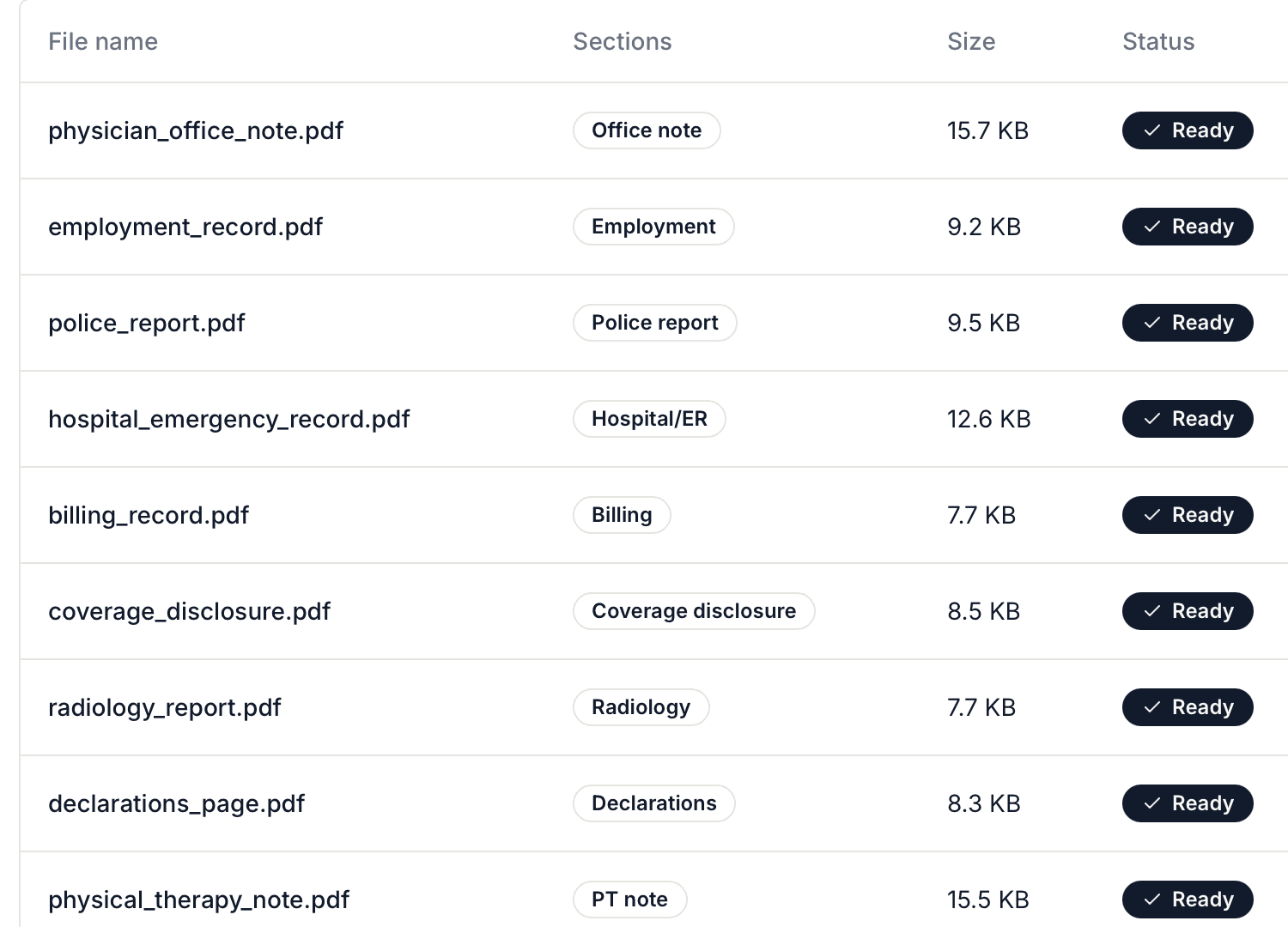
Drop in what the providers and the carrier sent, or pull it from Clio. SettlHQ works out what each document is on the way in.
- Hospital / ER
- Office notes
- Radiology
- Operative reports
- PT notes
- Billing
- Police reports
- Declarations pages
- Coverage disclosures
- Employment records
- 02
Every page gets read
Dates, providers, diagnoses, procedures, ICD codes and charges come out of each page. Each one keeps a pointer to where it was found, so nothing in the output is unsourced.
- 03
Review the work product
You get a case profile, a chronology, an expense summary and a demand letter draft. Open any finding and the source page is beside it. Fix what needs fixing, then export to Word.
What comes out the other side.
Four pieces of work product, each one built from the documents in the case and nothing else.
Medical chronology
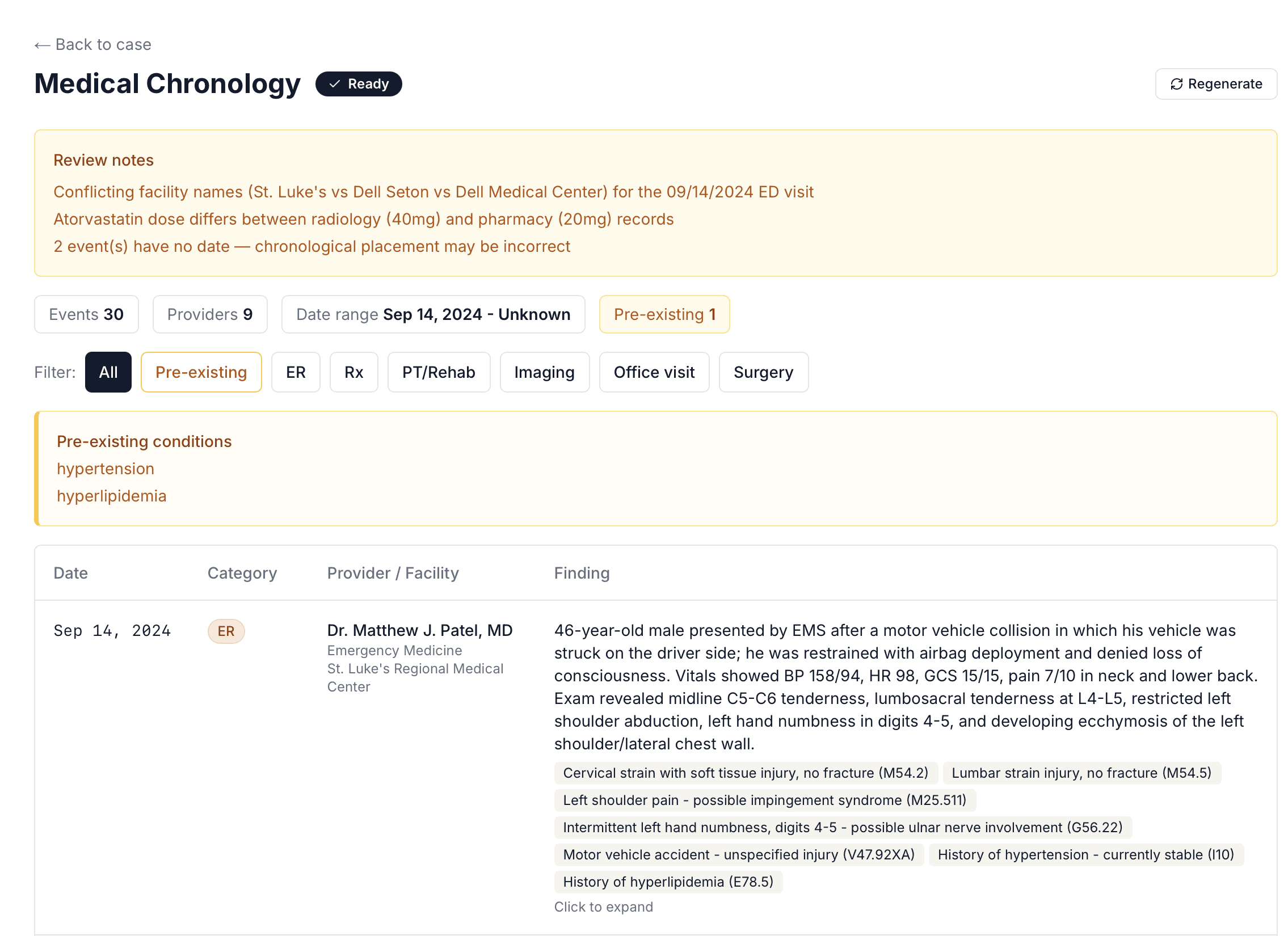
Every visit in order, with the conflicts called out.
Events from every provider, sorted by date and filterable by type: ER, imaging, PT, surgery, office visits, prescriptions. When the records disagree about a facility name, a dose, or a date, the chronology says so at the top instead of quietly picking one.
Medical expense summary
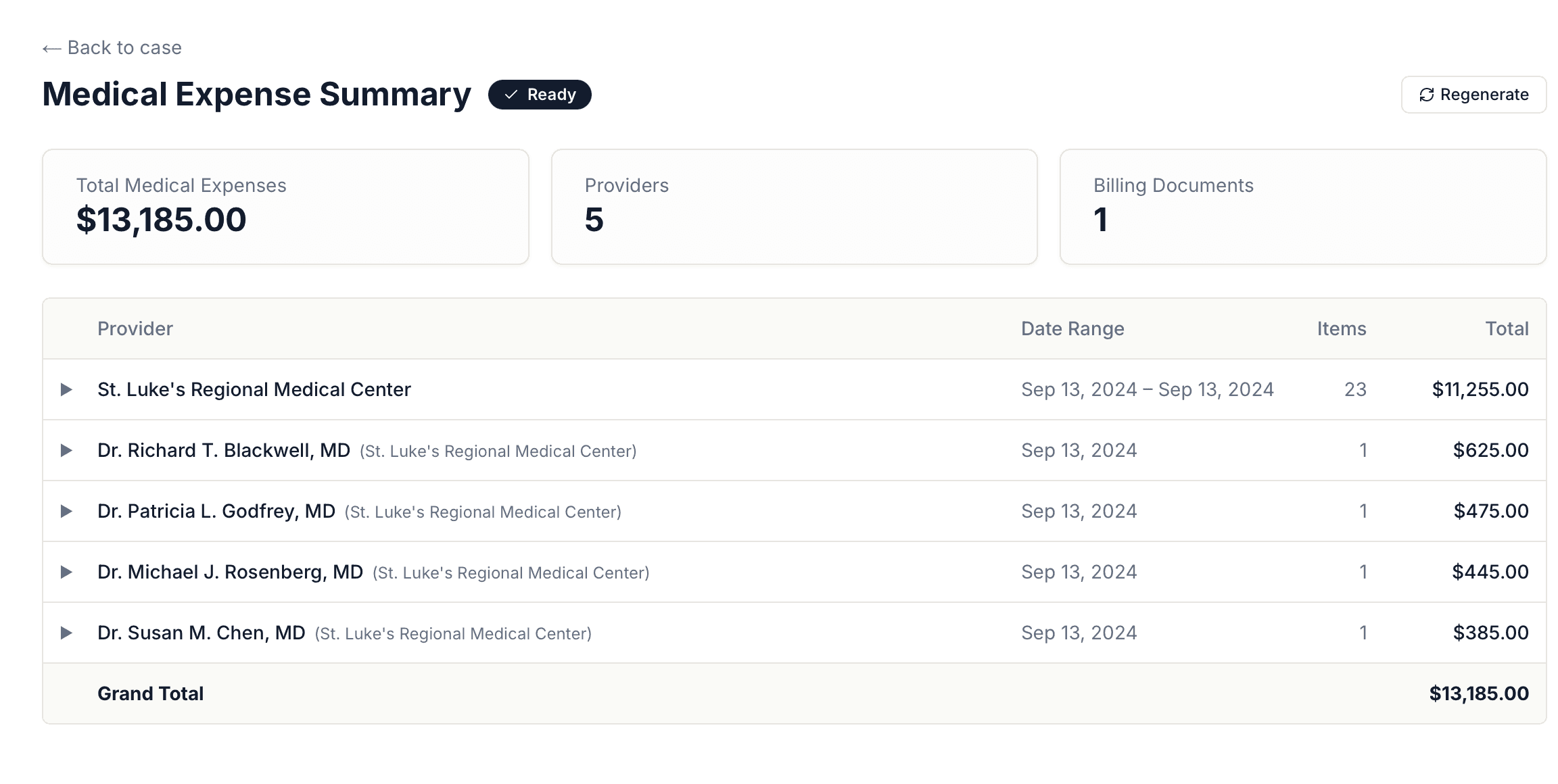
Totals by provider, with the line items behind them.
Billing records broken out by facility and physician, with date ranges, item counts and a grand total you can drop straight into the demand. Expand any row to see the charges it was built from.
Demand letter
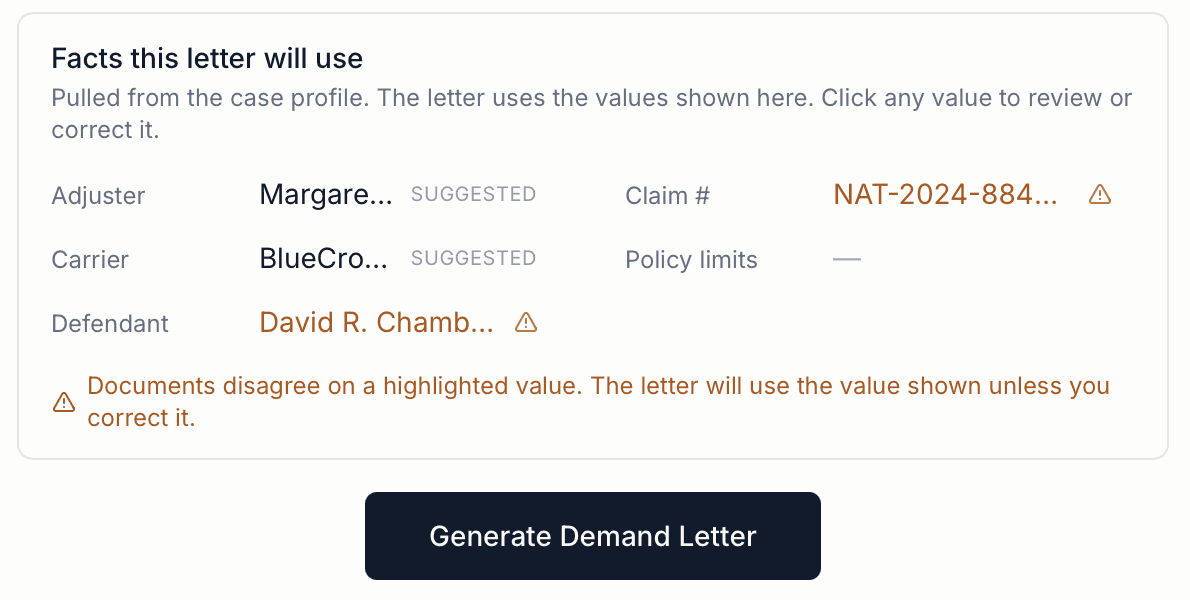
Confirm the facts before the letter is written.
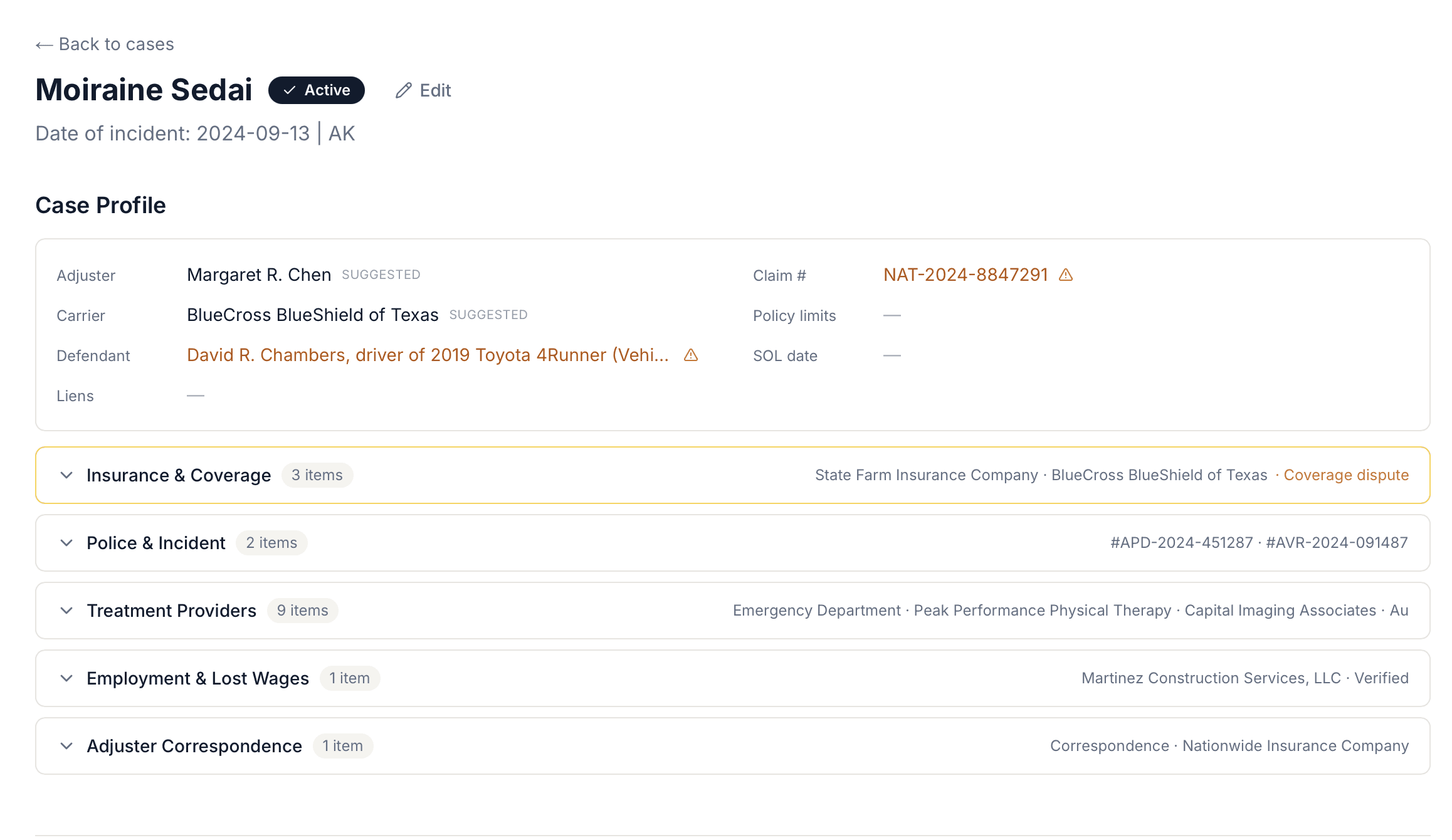
Adjuster, carrier, claim number and defendant are pulled from the case documents. Where two documents disagree, the value is flagged for you to settle before the draft is generated. Then edit the letter in place and export it to Word.
Case chat
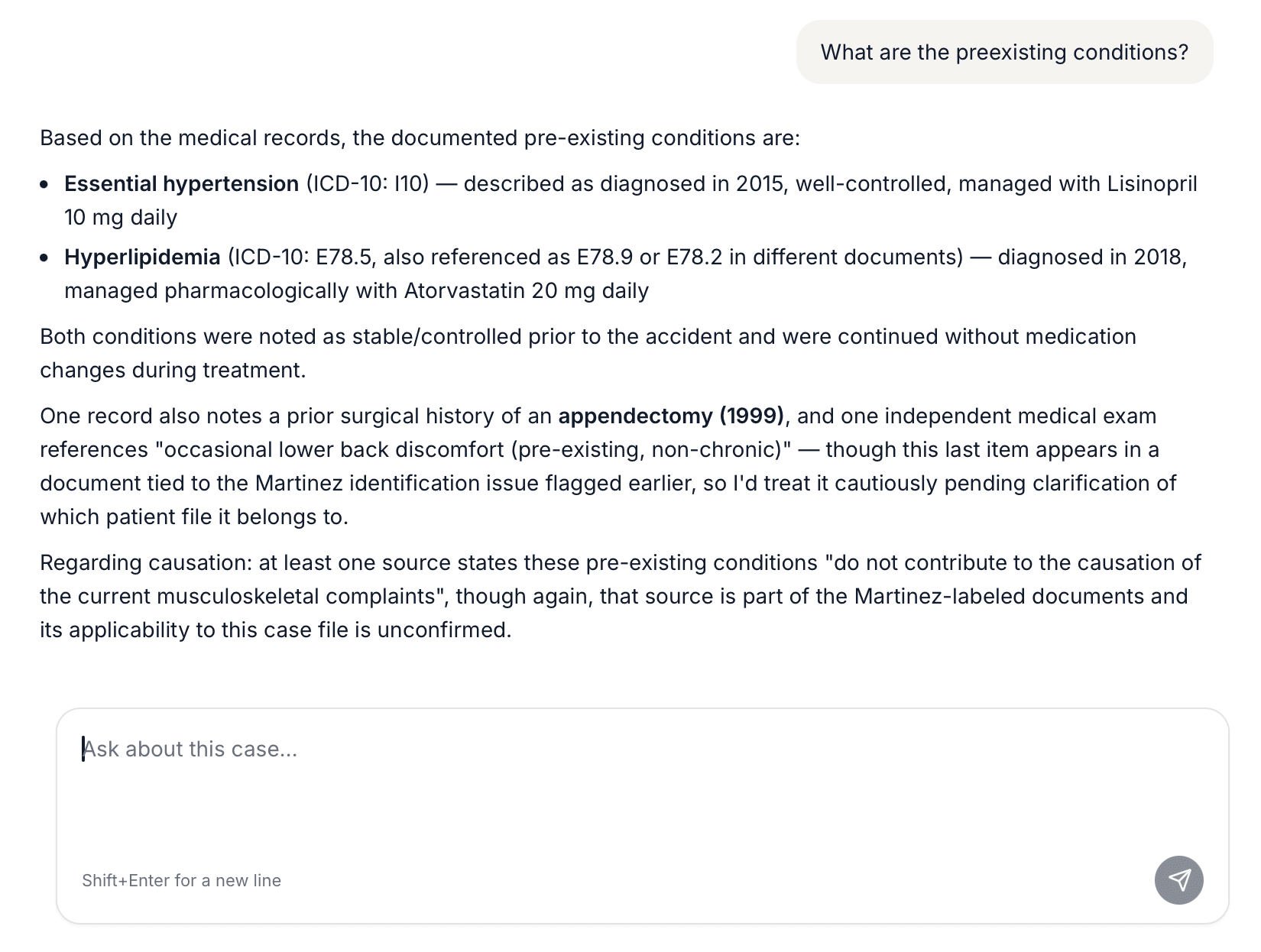
Ask the file a question.
What are the pre-existing conditions? What did the IME say about causation? Answers come from the uploaded documents and the generated analyses, and they say when a source looks like it might belong to a different file.
Built for files full of protected health information.
Your clients' records get the same care you put into the case. Everything on this list is in place today, not on a roadmap.
Read the full security page- Encrypted in transit and at rest
- TLS on every connection. Documents, database and logs encrypted under keys we manage in AWS KMS.
- One firm, one boundary
- Every case, document and output is scoped to your firm at the database layer, on every request.
- A record of every action
- Uploads, views, edits and exports are logged with user, time and IP. Health information is scrubbed from application logs.
- Scanned before it is read
- Uploaded files are checked for malware before they enter the pipeline. Anything flagged is quarantined.